The Everest Base Camp Trek with Helicopter Return is a premium trekking experience designed for travelers who want to explore the iconic Himalayan landscapes without the strain of a long return trek. This itinerary combines the adventure of trekking to Everest Base Camp and Kala Patthar with the convenience and luxury of a helicopter ride back to Kathmandu. For those short on time or looking for a more comfortable descent after days at high altitude, this trek provides the perfect balance between challenge, adventure, and efficiency.
By blending trekking and aerial travel, this itinerary allows you to experience the grandeur of the Himalayas while minimizing fatigue and maximizing scenic experiences.
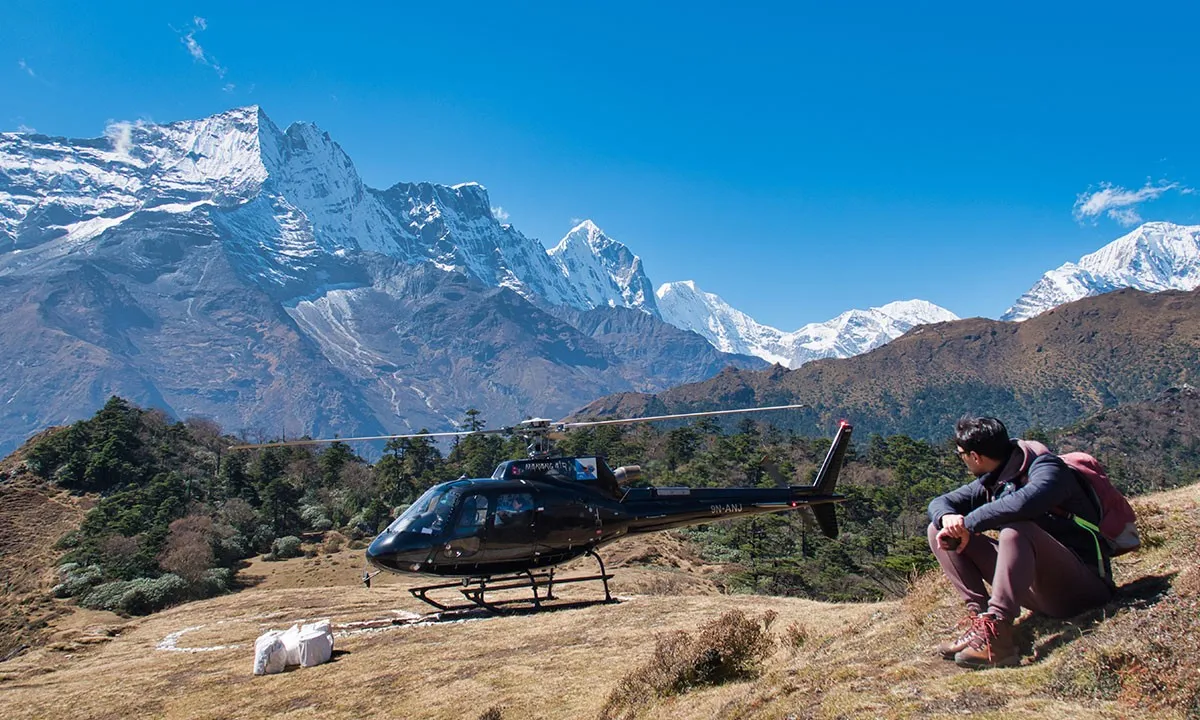
Overview of the Everest Base Camp Trek with Helicopter Return
Traditionally, reaching Everest Base Camp involves trekking for 12–16 days, including the return journey. With the helicopter return option, trekkers still hike along the classic route through Lukla, Namche Bazaar, Tengboche, Dingboche, and Gorakshep, but instead of descending on foot, a helicopter transports them directly back to Kathmandu.
This approach significantly shortens the trekking duration while providing breathtaking views of Mount Everest, Lhotse, Nuptse, and the surrounding peaks from the air—a perspective that is impossible from the trail.
Why Choose Everest Base Camp Trek with Helicopter Return?
1. Reduced Physical Strain
After days of trekking at high altitude, descending to Lukla can be exhausting. The helicopter return eliminates several days of walking, helping prevent fatigue, joint strain, and altitude-related issues during the return journey.
2. Time-Saving Adventure
The helicopter return is ideal for travelers with limited time. While you still get the full Everest Base Camp experience, the total duration of the trek is shortened, allowing for a 10–12 day itinerary instead of 14–16 days.
3. Spectacular Aerial Views
Flying over the Himalayas offers an unmatched perspective of the Khumbu region. Passengers witness glaciers, deep valleys, snow-capped peaks, and the majestic Mount Everest from a unique vantage point.
4. Enhanced Comfort and Safety
High-altitude trekking can be physically demanding. A helicopter return provides a safe and comfortable descent, reducing the risks associated with prolonged high-altitude exposure. In case of emergencies, the helicopter also serves as a rapid evacuation option.
Typical Itinerary Highlights
A standard Everest Base Camp Trek with Helicopter Return typically follows this pattern:
-
Kathmandu to Lukla Flight: Begin the journey with a scenic domestic flight to Lukla, the gateway to the Everest region.
-
Trekking through Sherpa Villages: Pass through Phakding, Namche Bazaar, Tengboche, and Dingboche, enjoying Sherpa culture and Buddhist monasteries.
-
Reaching Everest Base Camp: Arrive at Everest Base Camp and explore the legendary Khumbu Glacier.
-
Kala Patthar Hike: Optional sunrise hike to Kala Patthar for panoramic views of Everest, Lhotse, and Nuptse.
-
Helicopter Return to Kathmandu: Board a helicopter at Gorakshep or nearby for a direct flight back to Kathmandu.
Difficulty Level and Fitness Requirements
The Everest Base Camp Trek with Helicopter Return is rated moderate to challenging. While the helicopter return reduces overall trekking days, trekkers still need a good level of fitness to manage high-altitude walking.
Proper acclimatization is essential to prevent altitude sickness. Daily trekking distances average 4–6 hours, with steeper sections near Lobuche and Gorakshep. Previous trekking experience is helpful but not mandatory.
Best Time for the Trek
The ideal seasons for this trek are spring (March to May) and autumn (September to November). These periods provide clear skies, stable weather, and excellent mountain visibility.
Winter trekking is possible for experienced trekkers, offering stunning snow-covered peaks, but temperatures can be extremely cold. Monsoon season is generally not recommended due to heavy rainfall and slippery trails.
Accommodation and Meals
Accommodation along the trek consists mainly of teahouses, offering twin-bed rooms and shared bathrooms. Dining halls serve a mix of local and international dishes such as Dal Bhat, noodles, pasta, soups, and eggs.
Facilities become simpler at higher elevations, so trekkers should manage expectations and carry essential items like water purification tablets, personal toiletries, and snacks.
Cost of Everest Base Camp Trek with Helicopter Return
The total cost of the Everest Base Camp Trek with Helicopter Return varies depending on group size, season, and service level. On average, prices range from USD 2,500 to USD 4,500 per person.
This cost generally includes:
-
Domestic flights (Kathmandu–Lukla–Kathmandu for helicopter return)
-
Trekking permits and national park fees
-
Licensed trekking guides and porters
-
Accommodation and meals during the trek
-
Helicopter ride back to Kathmandu
While this option is more expensive than a traditional trek, the savings in time, energy, and risk make it a worthwhile investment.
Who Should Choose This Trek?
The Everest Base Camp Trek with Helicopter Return is ideal for:
-
Travelers seeking a premium Everest experience
-
Trekkers with limited vacation time
-
Luxury travelers and small groups
-
Elderly trekkers or those wanting less strenuous descents
-
Photographers and adventure enthusiasts seeking unique aerial views
Responsible and Sustainable Trekking
Responsible trekking is essential in the Everest region. Visitors should minimize waste, avoid plastic litter, respect local culture, and support community-based lodges. Helicopter operators follow strict regulations to reduce environmental impact in Sagarmatha National Park.
Conclusion
The Everest Base Camp Trek with Helicopter Return offers a perfect blend of adventure, comfort, and efficiency. By combining a classic trek with a scenic helicopter ride, travelers enjoy the iconic Everest landscapes, Sherpa culture, and high-altitude challenges without the exhausting return journey on foot. For those who want a safe, time-efficient, and unforgettable Everest experience, this trek provides the ultimate Himalayan adventure while maintaining luxury, convenience, and spectacular views.