The Way People Look for Answers Has Shifted
People don’t search the way they used to.
Earlier, finding answers meant typing keywords, opening links, and scanning through content. It took time, and honestly, a bit of patience.
Now, things are different.
Users want direct answers. They want clarity without effort. And most importantly, they want answers that actually make sense for them.
That last part is where most systems still fall short.
Because even when the answer exists, it doesn’t always match the user’s situation.
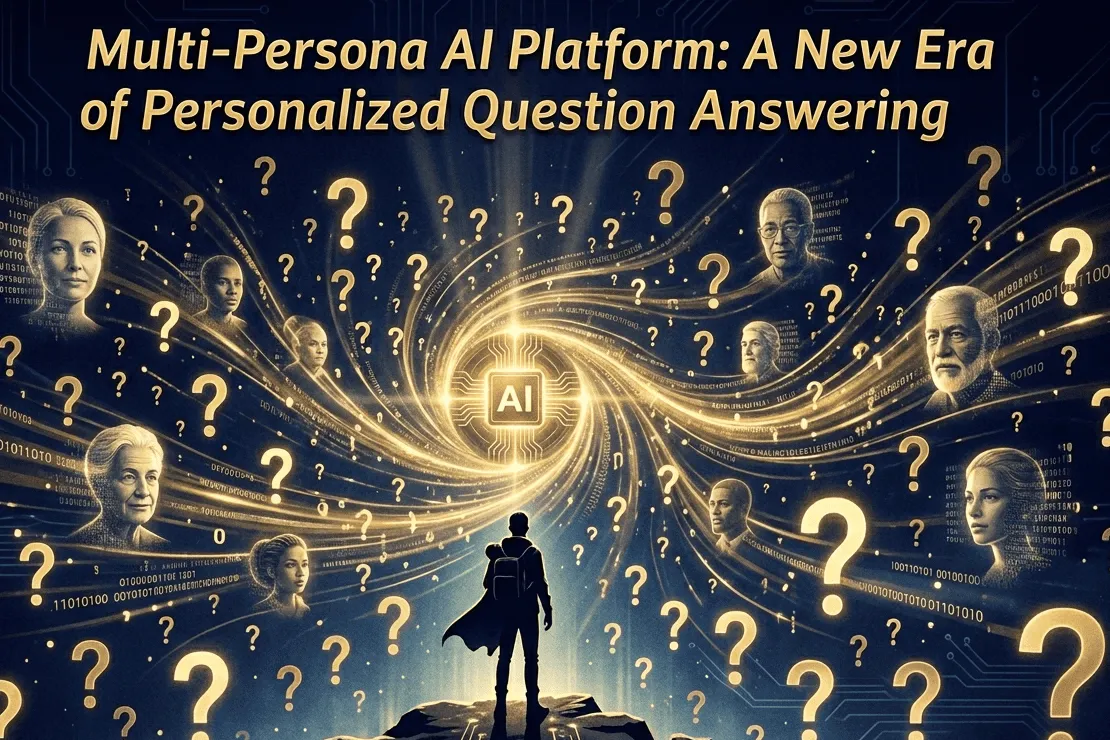
That’s where a Multi-Persona AI Platform for All Your Questions starts to change things. It focuses on delivering answers that feel relevant, not just correct.
Generic Answers Are No Longer Enough
Let’s be real for a second.
Getting a generic answer can be frustrating.
You read it, but you’re not sure if it applies to you. You might need to adjust it, interpret it, or even search again.
That extra effort breaks the experience.
Users don’t want to do that anymore.
They expect systems to understand what they need and respond accordingly.
A multi-persona approach solves this by adapting how answers are delivered based on the context.
So instead of giving one standard response, it gives the right version of that response.
Different Users, Different Needs
Not every user is on the same level.
A beginner might ask, “How does this work?”
An experienced user might ask, “Why is this not working?”
Even though both questions sound similar, the expectation is completely different.
A beginner wants explanation.
An expert wants precision.
Traditional systems treat both the same.
A multi-persona system doesn’t.
It adjusts the answer based on who is asking and what they likely need.
That’s where personalization actually becomes useful.
Personalization That Goes Beyond Basics
A lot of platforms talk about personalization.
But in many cases, it’s surface-level.
Showing a name or remembering preferences is not enough.
Real personalization happens when the answer itself changes based on the user.
A multi-persona system does exactly that.
It adjusts:
- How detailed the answer is
- The tone of the response
- The structure of the explanation
This makes the interaction feel more aligned with the user’s intent.
Understanding Intent Changes Everything
Intent is often overlooked, but it plays a huge role.
Two people can ask the same question for completely different reasons.
“How do I set this up?”
One person might be exploring. Another might be stuck.
Without understanding intent, responses can feel off.
A multi-persona approach focuses on this layer.
It tries to figure out why the question is being asked.
That allows it to deliver a more accurate and relevant answer.
Reducing the Effort Required to Get Answers
Users don’t want to work hard to find information.
They don’t want to read through long content unless they have to.
They don’t want to filter out irrelevant details.
A Multi-Persona AI Platform for All Your Questions reduces that effort.
It presents answers in a way that matches the user’s need from the start.
This saves time and makes the experience smoother.
Making Interactions Feel Natural
Human conversations are not rigid.
People adjust how they speak depending on who they are talking to.
They simplify things when needed. They go deeper when required.
That flexibility is what makes conversations feel natural.
A multi-persona system brings that flexibility into digital interactions.
Instead of fixed responses, it creates a flow that feels more conversational.
Improving Engagement Without Extra Effort
When answers feel relevant, users stay engaged.
They ask more questions. They explore more. They rely on the system.
If answers feel generic, engagement drops quickly.
A multi-persona approach improves engagement by making responses feel tailored.
And it does this without adding complexity for the user.
Supporting Multiple Use Cases in One Place
Modern platforms are not built for just one type of interaction.
They handle:
- Customer support
- Onboarding
- Learning
- Internal queries
Each of these requires a different communication style.
Instead of building separate systems, a multi-persona approach handles all of them together.
This simplifies the overall setup while improving effectiveness.
Reducing Repetition and Follow-Ups
One of the biggest inefficiencies in question answering is repetition.
Users often need to ask follow-up questions because the initial answer wasn’t clear enough.
This creates longer conversations and more effort.
A multi-persona system reduces this.
By delivering better answers upfront, it minimizes the need for repeated interactions.
Learning From User Behavior Over Time
Better answers don’t come from static systems.
They improve with usage.
As users interact, patterns start to appear.
What kind of answers work best?
Where do users get stuck?
What do they ask repeatedly?
A multi-persona system uses these patterns to refine responses.
This creates a cycle of continuous improvement.
Aligning With Broader Technology Trends
The shift toward personalized systems is not happening in isolation.
It reflects a broader movement in how technology is evolving.
Insights from Trends in Artificial Intelligence show that systems are becoming more focused on understanding users rather than just responding to them.
This shift is shaping how information is delivered.
A multi-persona approach fits naturally into this direction.
Making Self-Service More Practical
Self-service has always been a goal for businesses.
But it often falls short because users struggle to find what they need.
A multi-persona system improves this experience.
Instead of browsing through content, users can ask directly.
And the answer they receive actually fits their situation.
This makes self-service more effective and easier to use.
Helping Internal Teams Work Better
This approach is not limited to customers.
Internal teams benefit from it too.
Employees often need answers in different formats.
Sometimes they want a quick response. Sometimes they need a detailed explanation.
A multi-persona system supports this flexibility.
It helps teams move faster and reduces dependency on others.
Scaling Personalization Without Complexity
As businesses grow, providing personalized answers becomes harder.
More users mean more variation in needs.
Handling this manually is not practical.
A multi-persona system solves this by adapting automatically.
It scales personalization without adding extra complexity.
Reducing Friction Across Interactions
Friction often comes from small mismatches.
An answer that is too detailed.
An answer that is too vague.
These small issues can make interactions frustrating.
A multi-persona approach reduces this friction.
It aligns responses with what the user actually needs.
Why This Shift Matters for Businesses
Businesses are realizing that delivering answers is not enough.
How those answers are delivered matters just as much.
A better question-answering experience leads to:
- Higher satisfaction
- Better engagement
- Stronger retention
A multi-persona approach helps achieve all of this.
The Bigger Picture
This is not just about improving answers.
It is about improving communication.
Users expect systems to adapt to them.
That expectation will continue to grow.
What It All Comes Down To
People don’t just want answers.
They want answers that make sense for them.
A Multi-Persona AI Platform for All Your Questions makes that possible by adapting responses based on context and intent.
And as expectations continue to rise, this approach is shaping the future of personalized question answering.